

You are now leaving our website and entering a third-party website over which we have no control.
What is distracted driving and what are the consequences of driving while distracted?
Modified Date: 2025-12-26
TL;DR – What's at stake if you drive while distracted?
- What "distracted" means: When you're driving, any activity that takes your focus off the road counts as a distraction.
- Why it's dangerous: Taking your eyes off the road for even a few seconds dramatically increases your risk of a collision, which is why distracted driving is behind nearly a fifth of all road deaths in Canada.
- The costs of distraction: A distracted driving conviction means fines and demerit points, and will also have an impact on your insurance.
Bottom line: Distracted driving is an offence everywhere in Canada and will cost you in fines, points, and insurance—plus it puts everyone else on the road at risk too.
What is distracted driving?
Distracted driving is doing anything while you're driving that takes your attention away from the task of driving. And it's become a major road safety issue in today's connected world. In 2021, for example, distracted driving was responsible for 25.5% of serious injuries on Canadian roads.1
If you're like most Canadians, though, you're probably using your mobile phone throughout the day: catching up on social media updates, checking email, getting directions, sending messages—maybe even checking in on your monitored home security app while you're out and about. But when you're driving, your phone needs to take a back seat, because the moment you pick up your phone while driving, you're no longer just driving. You're driving while distracted — and breaking the law, no matter where you are in Canada.
How dangerous is distracted driving?
It makes sense that doing something that diverts your attention from the act of driving could have serious consequences, but it turns out those few seconds when drivers take their eyes off the road can be just as dangerous as drinking and driving:
- Distracted driving is a leading cause of fatal collisions: In 2020, distracted driving was a contributing factor in 21% of road collision fatalities in Canada, making it the second leading contributor to road fatalities (speeding was the top contributor, at 25%).2 And, despite ongoing public awareness programs,3 this number dipped only slightly, to 19.9%, in 2022.4
- Five seconds isn't as brief as it sounds: You might think taking your eyes off the road for the 4.6 seconds it takes to send a quick text5 wouldn't be that dangerous, but if you're texting while driving at 88.5 km/hour, you'll have driven the length of a football field without looking at the road.6
- Distracted drivers face an increased crash risk: Studies show that using a handheld phone while driving results in slower reaction times and an increase in crash risk.7 While the estimated increase in risk varies, from 1.7 to 3.6 times the risk when compared to a non-distracted driver (the variations come from differences in the methodology used), even the lowest increase in risk shows distracted driving poses a significant risk of collision.8
- Do as I say, not as I do? Public opinion surveys have found that a high proportion of Canadians agree about the dangers of using a handheld device while driving—but despite this, many drivers report they still occasionally engage in this behaviour.9
What driving behaviours pose a distraction risk?
While much of the focus on distracted driving centres on the use of electronic communication devices, there are other types of distracted driving behaviours that drivers need to be wary of. The following are just a few examples of other behaviours that can be a distraction risk when driving:
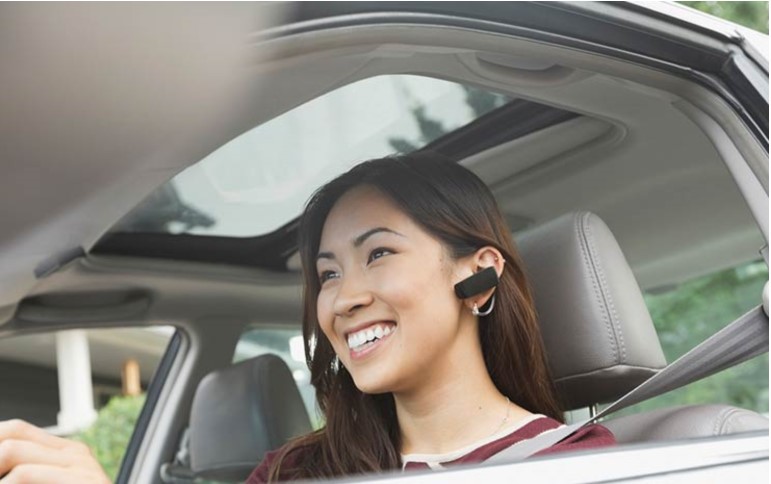
- Using a hands-free device to talk on your phone
- Using speech-based texting
- Selecting a playlist or adjusting the radio
- Reading a map
- Writing a quick note
- Eating and drinking
- Looking at and talking to other people in your car
- Reaching for something in the backseat
- Interacting with GPS devices or apps
- Taking off or putting on clothes or accessories
- Personal grooming, such as fixing hair and makeup
You may have noticed our list includes using a hands-free device or interface to call or text while driving. While going hands-free might be less of a distraction than using a handheld phone,10 it still poses what scientists call a "cognitive distraction" when you're behind the steering wheel.11
It's important to remember, engaging in any activity that's secondary to your primary task of driving can be a distraction risk. And, while most distracted driving laws in Canada specifically target the use of handheld communication devices while driving,12 these other types of distracted driving (for example, eating, drinking, or personal grooming while driving) can all fall within the broader range of the offence of careless driving.
What are the distracted driving laws in Canada? Are they different if I live in BC vs. Ontario?
In Canada, the provinces and territories are responsible for regulating road safety, so the specific wording of distracted driving legislation will vary depending on the jurisdiction. The first distracted driving laws in Canada were introduced in 2002, in Newfoundland and Labrador,13 and since 2019 every province and territory has enacted laws that establish distracted driving as an offence.14
Will I get a fine for texting or using my cell phone while driving?
Yes, you'll be fined for using a handheld cell phone while driving in Canada. The amount of the fine varies depending on the province or territory, but they're often quite hefty: In Ontario, for example, the fine for distracted driving begins at $615.15 You'll also receive demerit points in most provinces as well (again, the number of points will vary depending on the province or territory where the offence occurred).16
Is it distracted driving if I use a handheld cell phone to call or text while stopped at a red light?
Yes, it's considered distracted driving to use your handheld cell phone while you're stopped at a red light, because even while you're momentarily stopped, you're still operating a vehicle vehicle.
Is it distracted driving if I pull over to the side of the road to check my phone?
Pulling over to the side of the road can be a good option if you absolutely need to check your phone, but only if you're on a stretch of road where it's legal and safe to pull over.
So, for example, if you're on a section of road or highway where parking on the shoulder is prohibited or pulling over is only permitted in emergency situations, you should continue driving until you reach a spot where you can legally and safely pull over without impeding traffic. And remember, after pulling over, you should come to a complete stop before you check your phone.
What are some other legal consequences or penalties for distracted driving?
In addition to paying a fine and receiving demerit points, several provinces have imposed other administrative penalties for distracted driving. Depending on the jurisdiction, these consequences might include:17
- Licence suspension
- Driver improvement program enrolment
- Vehicle impoundment
Careless driving vs. distracted driving
Careless driving means driving without due care and attention (the specific legislative wording will vary depending on the province or territory). This offence catches any type of unsafe driving. So if a distracted driving behaviour—whether it's texting or eating or anything else that distracts you while driving, causes you to drive carelessly or in an unsafe manner—you could be charged with the offence of careless driving.
Careless driving typically attracts more serious penalties than a distracted driving offence. The fines tend to be higher, with more demerit points lost. And in Ontario, careless drivers can face jail time of up to six months (or up to two years, if the offence results in bodily harm or death).18
Careless driving (and distracted driving) shouldn't be confused with dangerous driving involving bodily harm or death, which is an offence under Canada's Criminal Code.19 Because dangerous driving is a criminal offence, it requires proof of a deliberate intent to create a dangerous situation, and a momentary lapse of attention caused by a moment of distraction, on its own, won't generally be enough to establish this intent.20
Does distracted driving affect my car insurance?
Yes, a distracted driving conviction will affect your car insurance, because your driving record is one of the factors insurers look at when calculating the cost of your car insurance premium. It might also jeopardize any discounts you're receiving for having a good driving record, your renewal eligibility with your current provider, or your ability to obtain a new policy from a different insurer.
The impact on your car insurance costs will generally depend on how long the conviction stays on your driving record, but your insurer might continue taking the conviction into account for a longer period.
How long does distracted driving stay on your driving record?
The length of time a conviction for distracted driving shows on your driving record will vary depending on the jurisdiction where the conviction was issued, and the type of driving record you order. In Ontario, for example, you'd usually order a 3 year driving record for insurance purposes. This record will show any Highway Traffic Act convictions for the past three years.21
Tips for preventing distracted driving
The good news? Most driving distractions are within your control. Here are some things you can do to help avoid driving while distracted:
- Keep your phone out of reach. This might mean putting it in the glove compartment, centre console, or on the back seat—anywhere that's difficult for you to reach. Hopefully the challenge of reaching for it will remind you not to try reaching for it.
- Set your phone to "Do Not Disturb While Driving". It's a good idea to use this setting if your smartphone offers it. Some phones automatically turn on this mode when they're connected to your car's Bluetooth, while others might require you to turn it on manually.
- Program your destination on your GPS before you go. Tapping in an address on your GPS, whether you're using a separate device or an on-screen one, is a major distraction once you're already on the go. If you need to change your destination while you're enroute, pull over when it's legal and safe to do so, and be sure to come to a complete stop first.
- Finish getting ready before you leave. Make those last-minute mascara touch-ups or beard comb-throughs in front of the mirror in your home, and not in your car's rearview mirror. And if something gets ruffled out of place while you're on the way? Take care of it once you're safely parked.
- Ask your passengers to be self-sufficient. Your role while driving doesn't include adjusting playlists or helping with seatbelts. If you have kids, make sure their needs are taken care of, and they're properly buckled in before you start driving.
- Remember you're still operating a vehicle when you're stopped at a red light. It can be tempting to check that last text message you received while you're at a red light, but it's still illegal even though you're momentarily stopped.
Did you know?
As a TD Insurance customer with auto coverage, if you've been accident-free for the last 6 years and carry our Accident Forgiveness coverage, we will 'forgive' your first at-fault or partially at-fault accident. This means your premiums won't increase when you renew your car insurance policy as a result of the accident specifically. Learn more about Accident Forgiveness here.
And , if you've been claims-free for over a year, you may be eligible for a claims-free reward. Learn more about our Claims Free Reward here.
Sources:
1https://tc.canada.ca/en/road-transportation/stay-safe-when-driving/distracted-driving
2https://tc.canada.ca/sites/default/files/2023-01/Road_Safety_in_Canada_2020_EN.pdf
3For example: https://www.cacp.ca/canada-road-safety-week.html; https://www.cacp.ca/operation-impact-2020eng.html?mid=454; https://leavethephonealone.ca/en/
5https://news.vt.edu/articles/2009/07/2009-571.html
6https://news.vt.edu/articles/2009/07/2009-571.html
7https://www.sciencedirect.com/science/article/pii/S1369847824002067
10https://www.sciencedirect.com/science/article/abs/pii/S0001457514002176; https://www.nsc.org/workplace/resources/infographics/hands-free-is-not-risk-free
11https://pmc.ncbi.nlm.nih.gov/articles/PMC3873766/
12Alberta's distracted driving offence includes reading, writing, sketching, and grooming. See https://www.alberta.ca/distracted-driving; https://kings-printer.alberta.ca/1266.cfm?page=t06.cfm&leg_type=Acts&isbncln=9780779847938&display=html (S.115.4)
13https://www.releases.gov.nl.ca/releases//2002/gsl/1220n03.htm
15https://www.ontario.ca/page/distracted-driving
16Nunavut is currently the only jurisdiction that does not include loss of demerit points as a penalty for distracted driving. See https://www.caa.ca/driving-safely/distracted-driving/distracted-driving-laws-in-canada/
18https://www.ontario.ca/laws/statute/90h08#BK223
19https://laws-lois.justice.gc.ca/eng/acts/c-46/section-320.13.html
20See R v Beatty (https://decisions.scc-csc.ca/scc-csc/scc-csc/en/item/2403/index.do)
The content on this page is for general information purposes only and does not constitute legal advice. Coverages described herein may be subject to additional eligibility criteria, limitations and exclusions. In the event you make a claim, potential indemnification is also subject to the receivability of the claim and the type of coverage you bought.
In the case of conflict between the content on this page and your policy wordings, your policy wordings shall take precedence.